


Snake Terrarium: A Closure Without Gaps
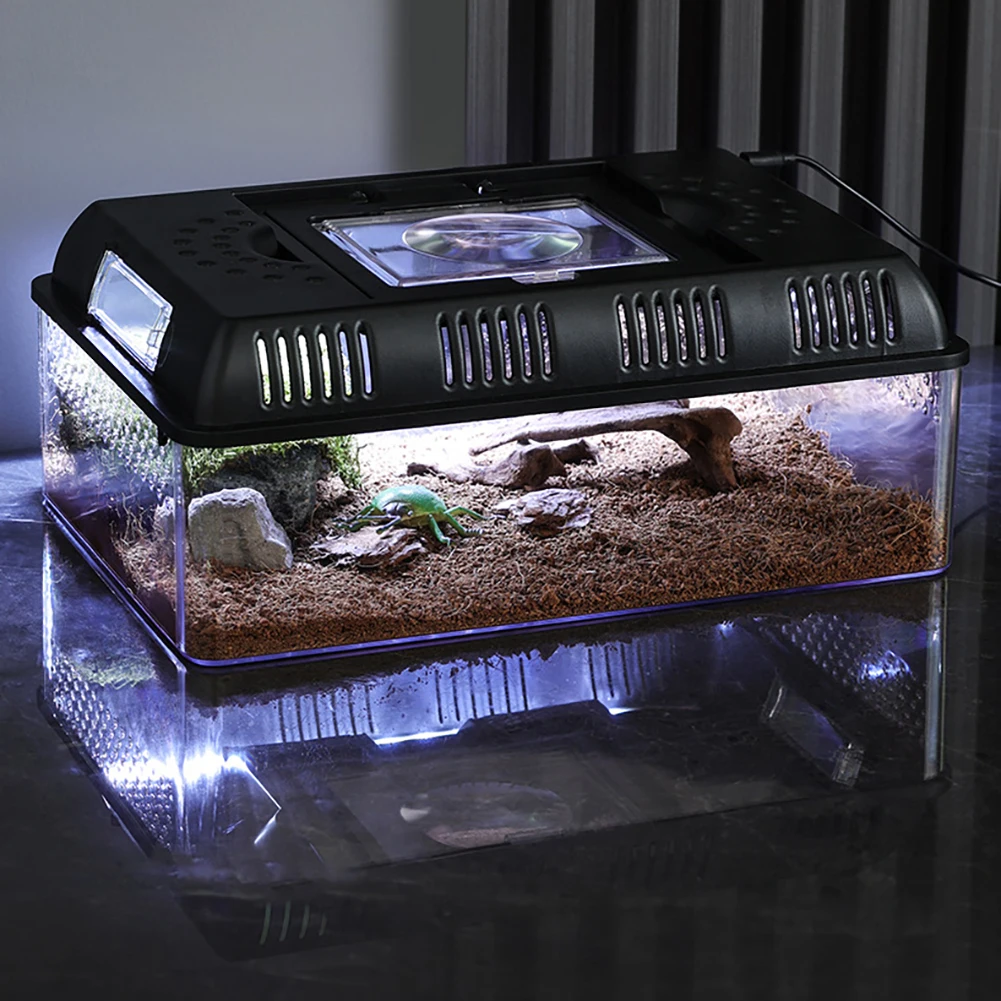
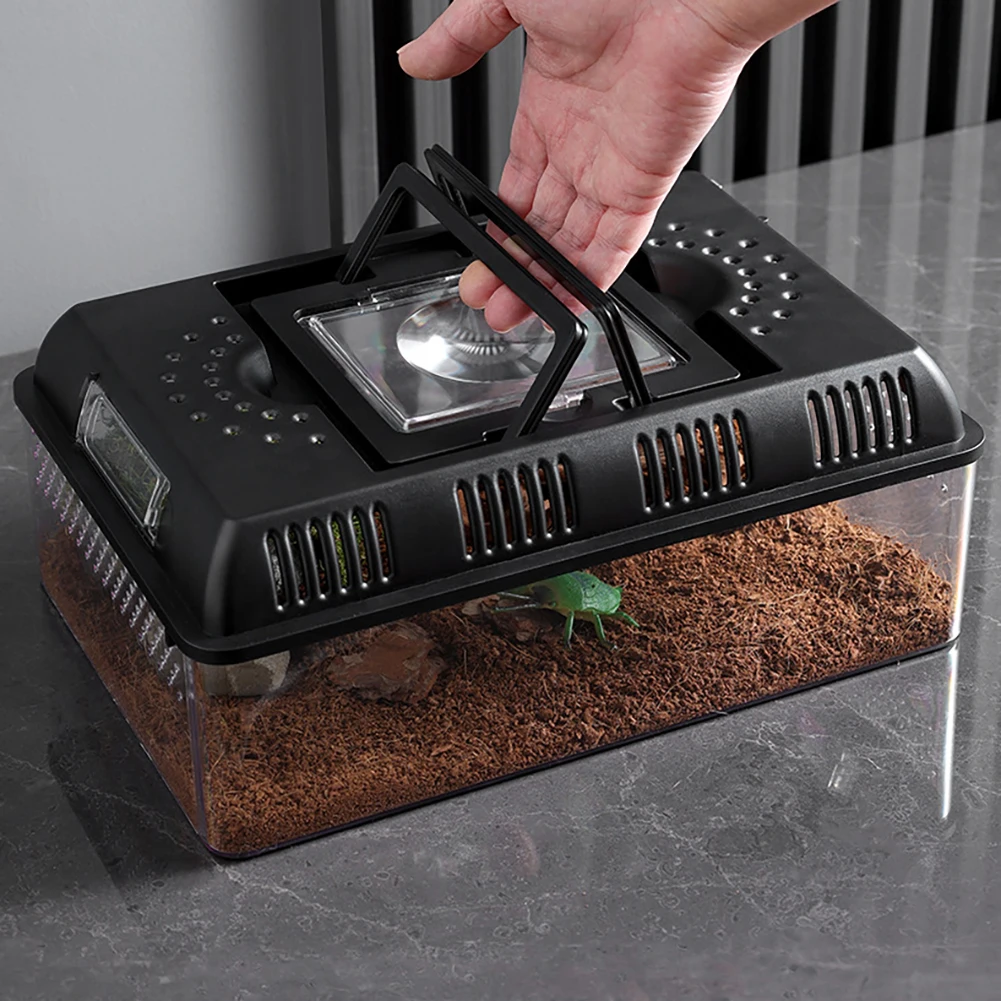
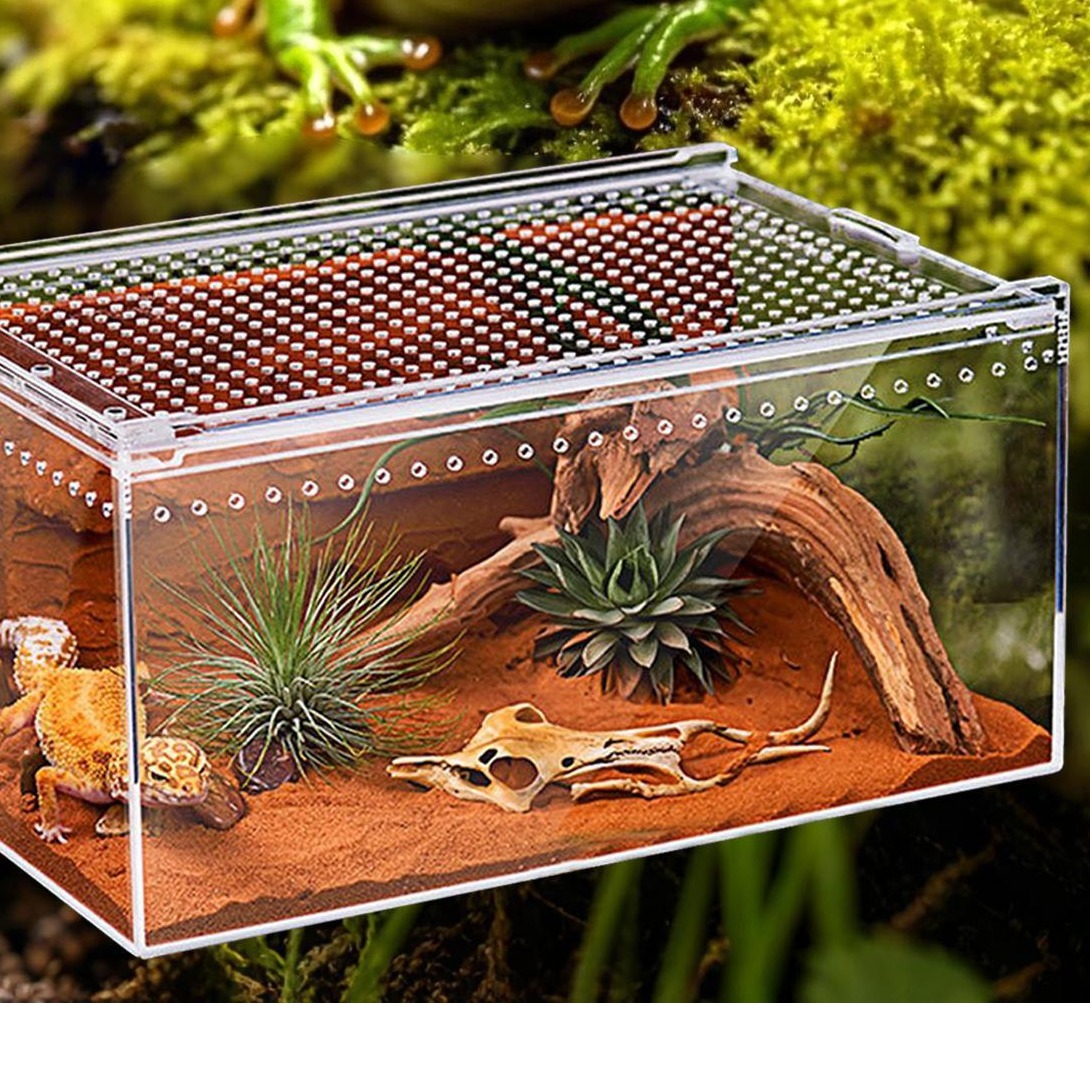
A snake does not escape through the door, it escapes through the millimetre you did not see. With this kind of enclosure, the closure counts for more than the volume: a young snake gets through a gap as wide as its head. The details, floor length, heat gradient and material, are below the selection. For a hatchling or a juvenile, start with our anti-escape acrylic snake terrarium.



Floor length before height
Most snakes kept in a terrarium are terrestrial or semi-arboreal. The usual rule is that the terrarium should be at least two thirds of the adult animal's length, and deep enough for a full turn. A tall, narrow model only suits climbing species, and it makes a temperature gradient harder to keep.
The heat gradient, which size decides
A snake regulates its temperature by moving between a warm zone and a cool zone. A terrarium that is too short leaves no room for that difference: the animal has nowhere to go. That is the technical reason why a juvenile acrylic breeding box is only kept for a few months, before comfort even comes into it.
Three materials, three trade-offs
- Glass: the best thermal inertia and a clear view. Heavy, and the opening must lock.
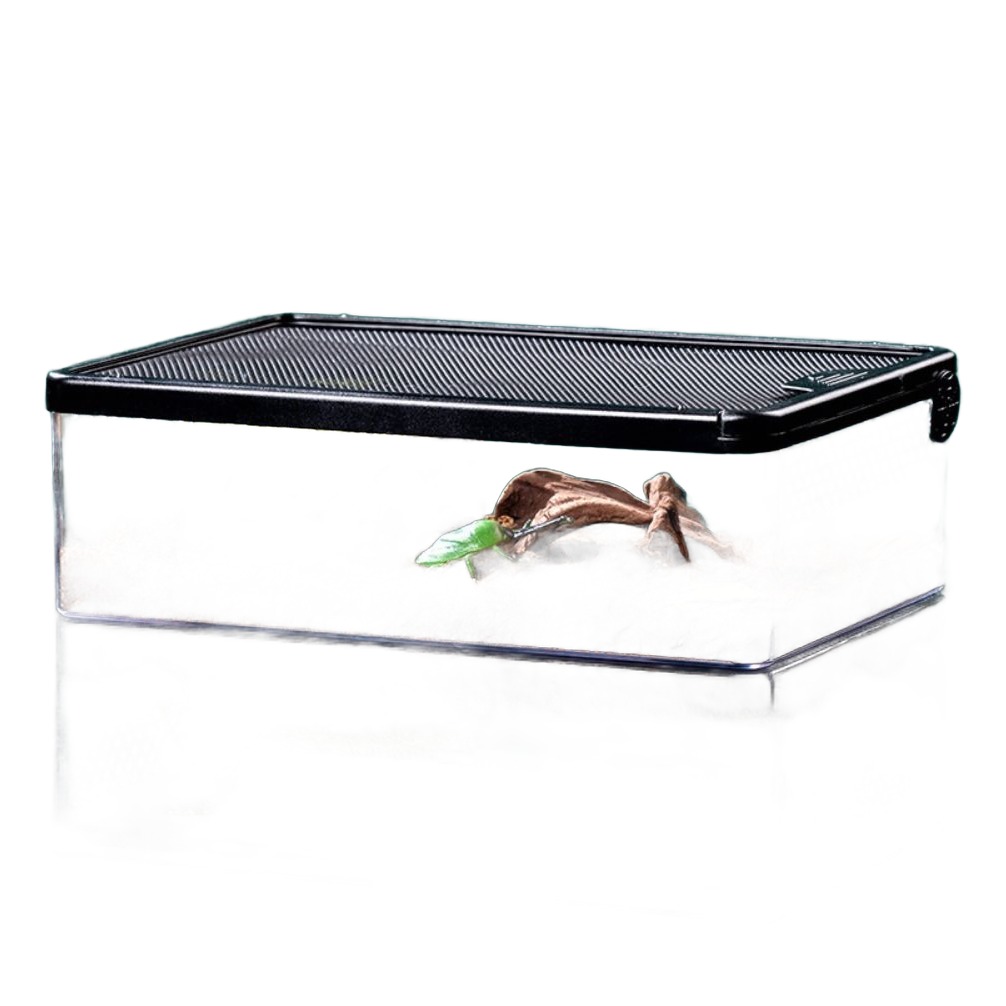
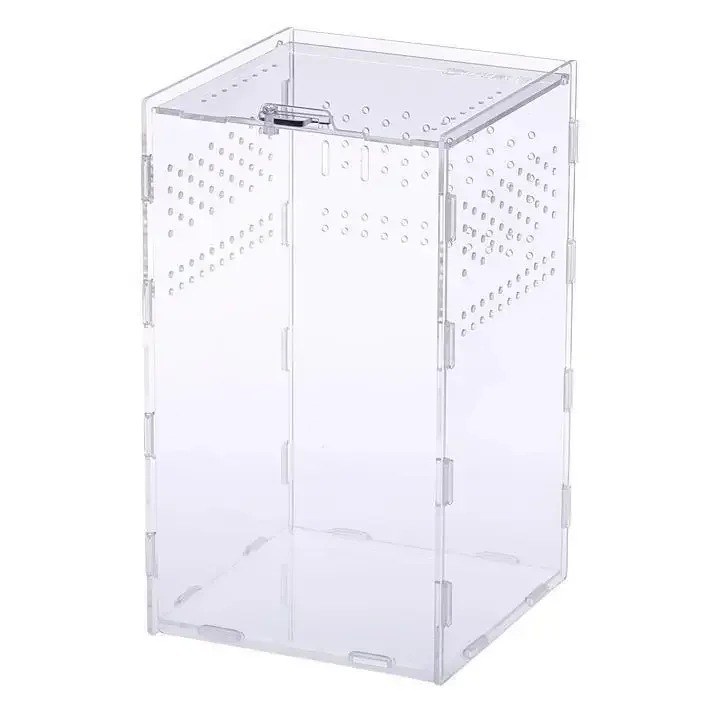
- Acrylic: light, shatterproof and a good insulator, but it scratches when cleaned and that shows over time. Our anti-escape acrylic model was designed for a young snake.
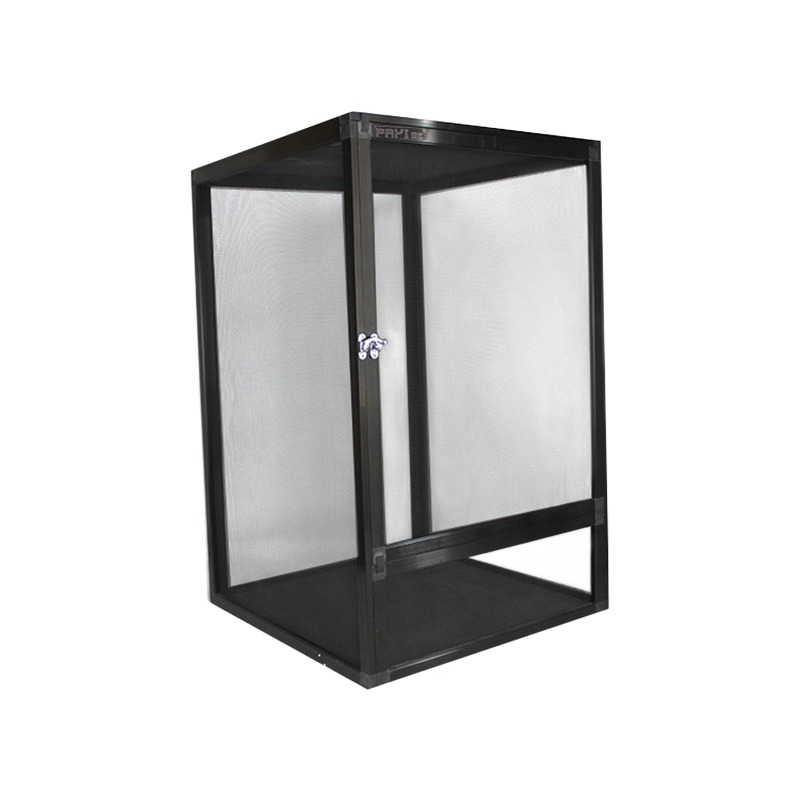
- Mesh: maximum ventilation, best kept for species that dislike stagnant humidity and for rooms that are already warm. Our front-opening snake terrarium has a mesh door at the top.
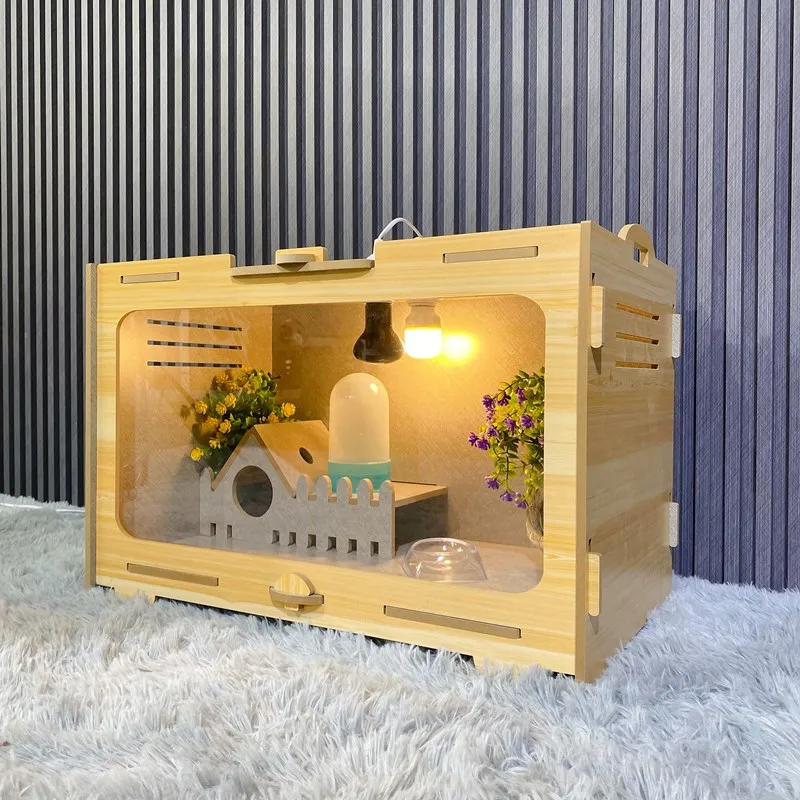
The point to check before anything else: the closing system. A latch, a lock or a sliding panel with a key is worth more than a lid that simply sits on top. It is the first cause of escapes, and it gives no second chance.
Frequently asked questions
What size for an adult corn snake?
Plan a terrarium length of at least two thirds of the animal's length, so roughly 80 to 100 centimetres for an adult, with enough depth for it to turn round. Height matters less, unless you add branches for a species that climbs.
Glass or acrylic for a snake?
Glass holds heat better, which makes the heat gradient easier to maintain, and it stays clear for years. Acrylic weighs far less and does not break, a real advantage if the terrarium has to be moved, but it scratches and turns hazy in the long run.
How do I prevent an escape?
Check the closing system before the size. A snake tests every joint and slips through a gap as wide as its head. Choose an opening that locks, and check the cable entries for the heating, which are the second weak point after the lid.
Terrarium or vivarium for a snake, what is the difference?
None in use. Vivarium is the general word for an enclosure housing a live animal, terrarium the word for a dry-floored enclosure. For a snake, both words describe the same habitat, and the criteria on this page apply: closure, floor length, heat gradient.
Can a juvenile stay in a small box for good?
No. A small box is fine for the first months, quarantine or hatching, but as the snake grows it can no longer move between a warm side and a cool side. Plan the move to a longer terrarium once the animal exceeds the length of the box.
For another species and another logic of floor space, see our tortoise terrariums.